Ingredients / Ingredienti

Topinambour – Jerusalem Artichokes

These knobby tubers are one of my favourite thing since I was a child. In Italy, they grow spontaneously near canals and rivers, they have a delicate flavour of artichokes (hence the name) and are just as versatile as potatoes. This it their season, so best to take advantage of them! We’ve decided to grow them in our allotment and just harvested a good amount to feast on for the coming weeks!

Questi tuberi bulbosi, che in Italia sono conosciuti con il loro nome francese, sono uno dei miei ingredienti preferiti da quanto ero bambina. In Italia crescono spontanei sulle rive dei fiumi e dei canali e se non li conoscete, ve li raccomando caldamente! Hanno un gusto delicato di carciofi e sono tanto versatili quanto le patate. L’autunno è la loro stagione e dato che li abbiamo coltivati nel nostro orto, abbiamo avuto un buon raccolto per le prossime settimane!

If you dig them from a river or canal side or you’ve grown them yourself and want to keep them as long as possible, once at home, put them in a flower pot covered in soil and leave them in the garden or on the balcony: they thrive in humid weather, so don’t worry if they get wet, just make sure to check them regularly to ensure they won’t rot.

Se li trovate lungo canali o fiumi o li avete coltivati e volete conservarli a lungo, seppelliteli in un vaso da fiori e copriteli di terra, lasciandoli in giardino o in balcone: amano il clima umido, dunque non vi preoccupate se si bagnano, basta controllarli di tanto in tanto per assicurarsi che non marciscano.

With regards with what to do with them, I particularly love them in a risotto (recipe to follow soon!), but they work just as well in a pan, with oil, salt and pepper. You can roast them (just as you would with potatoes) and they are great raw in a salad! You can even do a mash with them, to serve with a roast chicken!

In merito al loro uso in cucina, li adoro in un risotto (aspettate la ricetta!), ma sono ottimi in padella con olio, sale e pepe. Li potete fare al forno, come le patate e sono ottimi crudi, affettati sottili in insalata. Potete anche farne un purè da servire con il pollo arrosto!

Try them, you won’t regret it! Provateli, non ve ne pentirete!
Ingredients / Ingredienti

Let’s talk about RISOTTO

Risotto is one of my go-to dishes, firstly because it’s quite therapeutic to cook, secondly because it’s one of the first dishes that my grandmother Lella taught me, thirdly, because I love it!

I risotti sono una dei miei primi preferiti, prima di tutto perché li trovo terapeutici da preparare, con calma e con cura, in secondo luogo perché sono uno dei piatti che la mia nonna Lella mi ha insegnato a preparare ed infine perché li adoro.

Now, regardless to what some chefs would tell you, in Italy, you don’t mess about with risotto, it’s an art and you cook it as tradition tells you!

Non mi interessa cosa dicono gli chef moderni, il risotto è un’arte e si cucina come da tradizione!

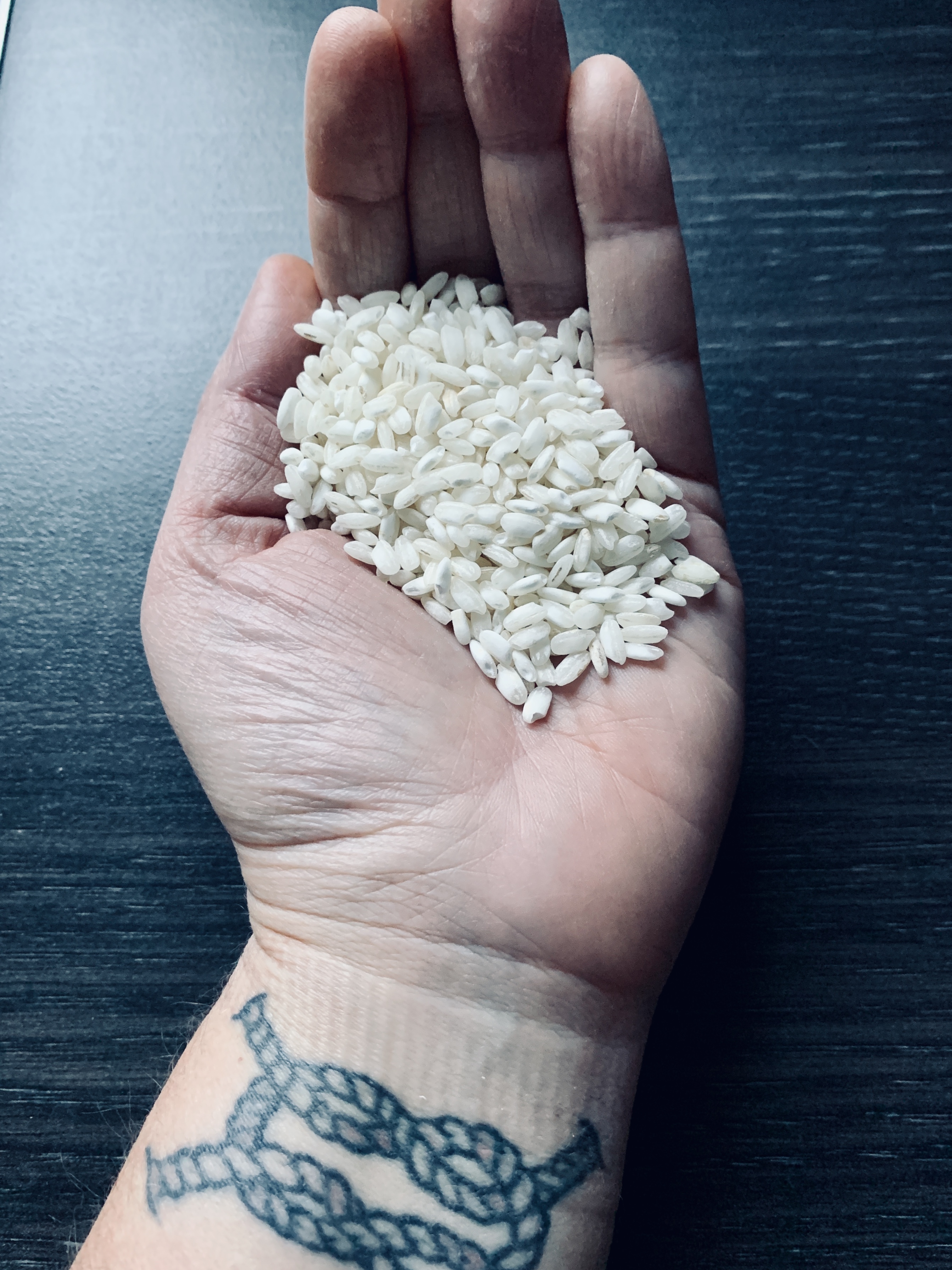
We use three main types of risotto: Carnaroli, Arborio and Vialone Nano, the latter practically impossible to find in the UK, unfortunately, but one of the most used in my region, Emilia-Romagna. The type of rice is fundamental and all the above are rich in starch, which makes for a creamy risotto.

In Italia le qualità di riso più usate sono: Carnaroli, Arborio e Vialone Nano, quest ultimo praticamente introvabile in Regno Unito purtroppo, ma uno dei più usati in Emilia-Romagna, in quanto ampiamente coltivatovi. Il tipo di riso è fondamentale e le qualità di cui sopra sono ricche di amido, ideali per un risotto cremoso.

The other important element to a good risotto is the alcohol. Most risotto recipes call for white wine and you would use red wine on a handful of them (on top of my head I can think of risotto alla pilota, which is made with sausages). To be honest, sometimes I use beer instead of white wine, as I like the slightly bitter accent it gives to some of the ingredients.

L’altro importante elemento per un buon risotto è l’alcool. La maggior parte delle ricette per risotti utilizzano vino bianco e il rosso si usa per pochi risotti (mi viene in mente il risotto alla pilota, con le salsicce o comunque di carne (braciole o puntarelle, a seconda della ricetta). Qualche volta, a seconda degli ingredienti, uso la birra al posto del vino, perché mi piace quella punta di amarognolo.

A good risotto starts with a soffritto made with vegetables. I use onions or shallots most of the times, which go with most risotto recipes (asparagus, courgettes, saffron, aubergines, etc). Sometimes I use garlic instead, especially with mushrooms risotto or seafood.

Un buon risotto inizia dal soffritto di verdure. A me piace usare principalmente cipolle o scalogna, che si adattano alla maggioranza delle ricette (di asparagi, di zucchine, allo zafferano, con le melanzane, ecc). A volte uso l’aglio, particolarmente per il risotto di funghi o di pesce.

Finally, the secret of the best risotto, is patience. You need to wait for each of the ladles of liquid to be absorbed before adding the next, you need to stir it with love, to let the starch out in the sauce, you need to taste it and love it, little by little.

Infine, il segreto per il miglior risotto è la pazienza. Bisogna aspettare che ogni mestolo di liquido sia assorbito, prima di aggiungere il successivo, bisogna mescolare con amore, per estrarre l’amido dal riso, devi assaggiarlo e amarlo, poco a poco.

I will share my risotto recipes in this blog, however I felt that I needed first to explain what a risotto is about, not rushing, choosing the right ingredients, having patience.

Condividerò le mie ricette per risotti in questo blog, tuttavia dovevo prima spiegare cosa fa un risotto, la calma, la scelta degli ingredienti giusti e la pazienza.