Listen to – Ascolta: Ghost town by The Specials
So…we talked about the ingredients (here and here), it’s now time to get them together in a mouthwatering dish.
Abbiamo parlato degli ingredienti (qui e qui), è il momento di unirli in un piatto da acquolina in bocca.
When I was little, my parents and I moved a few houses, as they were initially renting. I loved and still cherish my favourite childhood memories from my first house, in Ferrara city centre, Via Muzzina no. 36, however it was when we moved to Mizzana, on the outskirt of Ferrara, that I discovered the pleasure of Jerusalem artichokes. Our house was overlooking the canal (Boicelli) and my dad used to go there with his friends to forage this delicious tubers!
Quando ero piccola, i miei genitori ed io abbiamo cambiato un po’ di case in affitto. La mia casa del cuore, dei miei ricordi più amati, resta quella in centro storico a Ferrara, Via Muzzina numero 36, tuttavia è stato il trasloco a Mizzana, nella periferia nord della città, che mi ha fatto scoprire le delizie dei topinambour. La casa era di fronte al canale Boicelli e il mio papà e i suoi amici andavano spesso in cerca di questi buonissimi tuberi.
It all starts with a very thorough wash and a good old brush, especially if you forage them, your need to clean the Jerusalem artichokes oh so well! Remove all the dirt and soil, then peel them well and wash them again to remove any remaining grit.
Comincia tutto con un lavaggio accurato e una bella spazzolata, particolarmente se li avete raccolti e non comprati, dovete pulire i topinambour molto bene. Rimuovete tutto lo sporco e il terriccio, pelateli bene e lavateli di nuovo per togliere ogni residuo di terra.
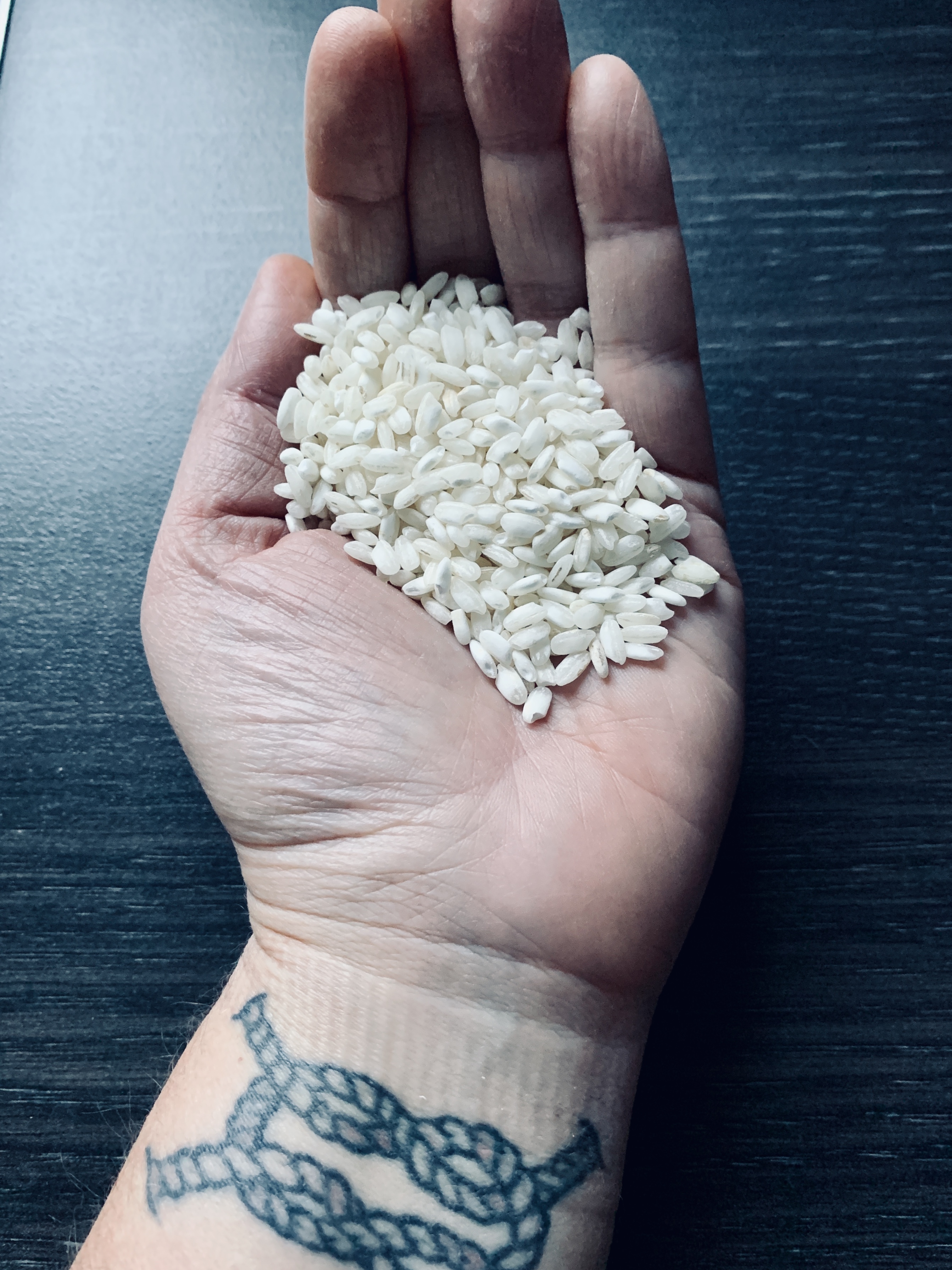
I also must say that the rice portions for me are in handfuls, this is how my grandmother taught me and this is how I work. Each portion corresponds to 2 handfuls, however you should always allow some extra (I guess it’s because risotto is so good and you’d always want more!) so it would always be odd numbers of handfuls!
Devo precisare che per valutare le porzioni di riso, io uso sempre le manate, perché questo è quello che mi ha insegnato la mia nonna, dunque così funziona per me. Ogni porzione sono due manate, tuttavia bisogna sempre contare un po’ di extra (penso sia perché il risotto è cosi buono che ne vuoi sempre un po’ di più!, quindi considerate sempre un numero dispari di manate!
Ingredients for 2 portions / Ingredienti for 2 servings:
5 handfuls of rice (Arborio, Carnaroli or Vialone Nano) / manate di riso da risotto
1 knob of butter / noce di burro
1/2 onion, peeled and thinly chopped (I like it red, but any onion or a shallot would do) / cipolla, pelata e tritata finemente (a me piace rossa, ma qualsiasi cipolla va bene o scalogno)
5-6 Jerusalem artichokes, cleaned, peeled and chopped in irregular chunks / topinambour, lavati, pelati e tagliati a pezzetti irregolarmente
100 ml good quality white wine / vino bianco di qualità (non in cartone!)
600 ml good chicken broth (or vegetable) – alternatively you can use a stock cube and water / brodo di pollo (o vegetale) – potete anche usare un dado e acqua
salt to taste / sale a piacere
50gr grated Parmesan / Parmigiano grattugiato
The method is important and should be followed similarly for most of my risotto recipes: melt the butter in the pot and add the finely chopped onions, let them gently sweat. Add the Jerusalem artichokes and let them simmer for a couple of minutes. The hob should be constantly on a medium heat.
Il metodo è importante e dovrebbe essere seguito per la maggior parte dei miei risotti: sciogliete il burro e aggiungete le cipolle, lasciandole appassire. Aggiungete i topinambour e fateli sobbollire per un paio di minuti. Il fornello deve rimanere sempre a fuoco medio.
Add the rice and mix it with the vegetables. The rice MUST toast for a few minutes to absorb the flavours, the trick is to touch the rice with your finger, if it’s hot, then it’s time to add the wine. Pour the wine in and stir well.
Aggiungete il riso nella pentola e mescolate bene. Il riso DEVE tostarsi per alcuni minuti per assorbire i sapori, il trucco è di toccare il riso con un dito, se scotta, è il momento di aggiungere il vino. Versatelo in pentola e mescolate bene.
Keep stirring regularly until the wine is absorbed. Just before the rice starts to stick to the pot, add a ladle of stock (or add the stock cube and a ladle of hot water). Stir again regularly until the liquid is absorbed, add another ladle of liquid and continue this way until the rice is cooked.
Continuate a mescolare regolarmente fino a che il vino si è assorbito. Appena prima che il riso si attacchi alla pentola, aggiungete un mestolo di brodo (o il dado e un mestolo di acqua calda). Mescolate ancora regolarmente fino a che il liquido è assorbito, aggiungete un altro mestolo e continuate fino a che il riso è cotto.
Take off the heat, add the grated Parmesan and stir to melt it. Taste the risotto and add salt if necessary. Cover with a lid and let it rest for about 5 minutes: this is what we called ‘mantecare’ in Italian. Serve the rice while warm and add more Parmesan to taste.
Togliete dal fornello e assaggiate, aggiungete il Parmigiano grattugiato e mescolate per scioglierlo. Assaggiate e regolate di sale se necessario. Coprite con il coperchio e fate mantecare per 5 minuti. Servite il riso ancora caldo e aggiungete Parmigiano a piacere.

 A homebaker abroad