Savoury / Salato

Risotto al radicchio

Listen to – Ascolta: Red Right Hand by Nick Cave & the Bad Seeds

Following the risotto rice article and the recipe for the Jerusalem artichokes risotto and the one with mushrooms, here is another risotto recipe.

Dopo l’articolo sul riso per risotti e le ricette del risotto coi topinambour e di quello ai funghi, è tempo di preparare un altro risotto.

Returning from Italy after Christmas, we had loads of Italian goodies and amongst them, some radicchio, which we always struggle to find here in the UK. We had some in a salad, but I reserved a little to prepare this delicious risotto: the bitterness of the radicchio marrying so well with the natural sweetness of the rice!

Tornati dall’Italia dopo Natale, abbiamo riportato alcune prelibatezze e tra queste, alcuni cespi di radicchio rosso. Parte è stato mangiato in insalata, ma ne ho conservato un po’ per questo risotto, dove l’amaro del radicchio si sposa con la dolcezza naturale del riso!

Like any other risotto recipe, patience is key, so don’t rush and enjoy the process.

Come ogni ricetta di risotto, la pazienza è fondamentale, dunque niente fretta e divertitevi nella preparazione.

Ingredients for 2 servings / Ingredienti per due porzioni:

5 handfuls of risotto rice / pugnetti di riso da risotto

1/2 onion, finely chopped / cipolla, tritata finemente

10 ml olive oil / olio di oliva

100 ml good quality white wine (or you can use beer, to enhance the bitterness of the radicchio) / vino bianco di buona qualità (o potete usare la birra per esaltare l’amarognolo del radicchio)

1 lt chicken or vegetable stock (or water+stock cube) / brodo di pollo o vegetale (o acqua e dado da brodo)

1 head of red radicchio / cespo di radicchio rosso

30 gr grated Parmesan / Parmigiano grattugiato

Put the oil in a pot and heat it gently. Add the onion and let it sweat. Once it’s translucent, add the rice and warm it up.

Mettete l’olio in pentola e scaldatelo a fuoco dolce. Aggiungete la cipolla e fatela appassire. Quando la cipolla diventa trasparente, aggiungete il riso e tostatelo per qualche minuto.

Add the wine (or the beer) and raise the hob to a medium/low heat, stir gently until the wine has evaporated.

Aggiungete il vino (o la birra) e alzate il fornello a temperatura medio/bassa, mescolate fino a che il vino è evaporato.

At this point, finely chop the white part of the radicchio (the bottom of the head) and add it to the rice. Let it cook for a few minutes, then start adding the stock (or add the stock cube and water), one ladle at time, continue to stir often and add another ladle once the previous has been absorbed.

A questo punto, tritate finemente la parte bianca del radicchio ed aggiungetela al riso. Fatela cuocere qualche minuto e cominciate ad aggiungere il brodo (o il dado e acqua), un mestolo alla volta, continuando a mescolare di frequente e aggiungete il mestolo successivo quando il precedente è stato assorbito.

Continue this way until the rice is cooked. Then add the finely chopped red, leafy part of the radicchio, the grated Parmesan and stir gently to incorporate. Cover the pan for a few minutes to let the risotto rest.

Continuate ad aggiungere il brodo fino a cottura del riso. Poi aggiungete le foglie del radicchio tritate finemente e il Parmigiano grattugiato. Mescolate dolcemente per amalgamare il tutto e lasciate il risotto a mantecare per alcuni minuti coperto.

I hope you’ll like it! Spero vi piacerà!

Savoury / Salato

Risotto with mushrooms – Risotto ai funghi

Listen to – Ascolta: Moving by Supergrass

We talked about the best risotto rice and about the Jerusalem artichokes risotto.

Abbiamo parlato del riso per risotti e della ricetta del risotto coi topinambour.

Now for what is probably my favourite risotto: with mushrooms. I have a soft spot for mushrooms, especially in those recipes where their flavour is enhanced and concentrated. This is one of them!

Passiamo a quello che probabilmente è il mio risotto preferito: coi funghi. A me i funghi piacciono parecchio, specialmente in quelle ricette dove il loro sapore viene esaltato e concentrato. Questa è una di quelle ricette.

Ever since moving to the UK, I’ve struggled to find wild mushrooms which taste would fit well in a risotto. Now I know which mushrooms work best (in my opinion) in a risotto: shiitake. They have a depth of flavour which is perfect in a risotto, much better than any other type I’ve tried.

Da quando ci siamo trasferiti nel Regno Unito, ho faticato a trovare un tipo di funghi che funzionasse bene nel risotto. Al momento i miei preferiti da usare sono i funghi shiitake. Hanno un gusto deciso che trovo perfetto nel risotto, molto meglio di altri funghi che ho provato.

This said, I always and I mean ALWAYS add some re-hydrated porcini mushrooms in my risotto. You can find them in the supermarkets and you simply have to leave them for 10 minutes to soak in hot water, to plump them up. You can then filter the water (as it will have a lovely taste of porcini) to also add to the risotto.

Detto questo, aggiungo SEMPRE porcini secchi al mio risotto. Basta lasciarli reidratare per una decina di minuti in acqua calda. Io uso anche l’acqua in cui riposano (filtrandola) per insaporire ulteriormente il risotto.

Ingredients for 2 servings / Ingredienti per due porzioni:

5 handfuls of risotto rice / pugnetti di riso da risotto

1/2 onion, finely chopped / cipolla, tritata finemente

10 gr butter / burro

100 ml good quality white wine (sometimes I use beer for this risotto) / vino bianco di buona qualità (a volte uso la birra in questo risotto)

1 lt chicken or vegetable stock (or water+stock cube) / brodo di pollo o vegetale (o acqua e dado da brodo)

100 gr shiitake mushrooms, finely chopped / funghi shiitake, tritati finemente

5 gr dried porcini, rehydrated in warm water / porcini secchi reidratati in acqua calda

30 gr grated Parmesan / Parmigiano grattugiato

Put the butter in a pot and melt it at a gentle heat. Add the onion and let it sweat. Add the mushrooms, fresh and dried (which you have rehydrated. Once it’s translucent, add the rice and warm it up.

Mettere il burro in una pentola e fatelo sciogliere dolcemente. Aggiungete la cipolla e fatela appassire. Aggiungete i funghi (sia quelli freschi che quelli secchi reidratati. Quando la cipolla diventa trasparente, aggiungete il riso e tostatelo per qualche minuto.

Add the wine (or the beer) and raise the hob to a medium/low heat, stir gently until the wine has evaporated. If you’ve kept the water from the dried mushrooms, add it to the pan (strain it first).

Aggiungete il vino (o la birra) e alzate il fornello a temperatura medio/bassa, mescolate fino a che il vino è evaporato. Se avete conservato l’acqua dei funghi secchi, aggiungetela alla pentola (ma prima filtratela).

Start adding the stock (or add the stock cube and water), one ladle at time, continue to stir often and add another ladle once the previous has been absorbed.

Cominciate ad aggiungere il brodo (o il dado e acqua), un mestolo alla volta, continuando a mescolare di frequente e aggiungete il mestolo successivo quando il precedente è stato assorbito.

Continue this way until the rice is cooked. Then add the grated Parmesan, stir to melt it and cover for a few minutes to let the risotto rest.

Continuate ad aggiungere il brodo fino a cottura del riso. Aggiungete poi il Parmigiano grattugiato, mescolate per scioglierlo e lasciate il risotto a mantecare per alcuni minuti.

Serve it hot and enjoy! Servitelo caldo e buon appetito!

Savoury / Salato

Risotto ai topinambour – Risotto with Jerusalem artichokes

Listen to – Ascolta: Ghost town by The Specials

So…we talked about the ingredients (here and here), it’s now time to get them together in a mouthwatering dish.

Abbiamo parlato degli ingredienti (qui e qui), è il momento di unirli in un piatto da acquolina in bocca.

When I was little, my parents and I moved a few houses, as they were initially renting. I loved and still cherish my favourite childhood memories from my first house, in Ferrara city centre, Via Muzzina no. 36, however it was when we moved to Mizzana, on the outskirt of Ferrara, that I discovered the pleasure of Jerusalem artichokes. Our house was overlooking the canal (Boicelli) and my dad used to go there with his friends to forage this delicious tubers!

Quando ero piccola, i miei genitori ed io abbiamo cambiato un po’ di case in affitto. La mia casa del cuore, dei miei ricordi più amati, resta quella in centro storico a Ferrara, Via Muzzina numero 36, tuttavia è stato il trasloco a Mizzana, nella periferia nord della città, che mi ha fatto scoprire le delizie dei topinambour. La casa era di fronte al canale Boicelli e il mio papà e i suoi amici andavano spesso in cerca di questi buonissimi tuberi.

It all starts with a very thorough wash and a good old brush, especially if you forage them, your need to clean the Jerusalem artichokes oh so well! Remove all the dirt and soil, then peel them well and wash them again to remove any remaining grit.

Comincia tutto con un lavaggio accurato e una bella spazzolata, particolarmente se li avete raccolti e non comprati, dovete pulire i topinambour molto bene. Rimuovete tutto lo sporco e il terriccio, pelateli bene e lavateli di nuovo per togliere ogni residuo di terra.

I also must say that the rice portions for me are in handfuls, this is how my grandmother taught me and this is how I work. Each portion corresponds to 2 handfuls, however you should always allow some extra (I guess it’s because risotto is so good and you’d always want more!) so it would always be odd numbers of handfuls!

Devo precisare che per valutare le porzioni di riso, io uso sempre le manate, perché questo è quello che mi ha insegnato la mia nonna, dunque così funziona per me. Ogni porzione sono due manate, tuttavia bisogna sempre contare un po’ di extra (penso sia perché il risotto è cosi buono che ne vuoi sempre un po’ di più!, quindi considerate sempre un numero dispari di manate!

Ingredients for 2 portions / Ingredienti for 2 servings:

5 handfuls of rice (Arborio, Carnaroli or Vialone Nano) / manate di riso da risotto

1 knob of butter / noce di burro

1/2 onion, peeled and thinly chopped (I like it red, but any onion or a shallot would do) / cipolla, pelata e tritata finemente (a me piace rossa, ma qualsiasi cipolla va bene o scalogno)

5-6 Jerusalem artichokes, cleaned, peeled and chopped in irregular chunks / topinambour, lavati, pelati e tagliati a pezzetti irregolarmente

100 ml good quality white wine / vino bianco di qualità (non in cartone!)

600 ml good chicken broth (or vegetable) – alternatively you can use a stock cube and water / brodo di pollo (o vegetale) – potete anche usare un dado e acqua

salt to taste / sale a piacere

50gr grated Parmesan / Parmigiano grattugiato

The method is important and should be followed similarly for most of my risotto recipes: melt the butter in the pot and add the finely chopped onions, let them gently sweat. Add the Jerusalem artichokes and let them simmer for a couple of minutes. The hob should be constantly on a medium heat.

Il metodo è importante e dovrebbe essere seguito per la maggior parte dei miei risotti: sciogliete il burro e aggiungete le cipolle, lasciandole appassire. Aggiungete i topinambour e fateli sobbollire per un paio di minuti. Il fornello deve rimanere sempre a fuoco medio.

Add the rice and mix it with the vegetables. The rice MUST toast for a few minutes to absorb the flavours, the trick is to touch the rice with your finger, if it’s hot, then it’s time to add the wine. Pour the wine in and stir well.

Aggiungete il riso nella pentola e mescolate bene. Il riso DEVE tostarsi per alcuni minuti per assorbire i sapori, il trucco è di toccare il riso con un dito, se scotta, è il momento di aggiungere il vino. Versatelo in pentola e mescolate bene.

Keep stirring regularly until the wine is absorbed. Just before the rice starts to stick to the pot, add a ladle of stock (or add the stock cube and a ladle of hot water). Stir again regularly until the liquid is absorbed, add another ladle of liquid and continue this way until the rice is cooked.

Continuate a mescolare regolarmente fino a che il vino si è assorbito. Appena prima che il riso si attacchi alla pentola, aggiungete un mestolo di brodo (o il dado e un mestolo di acqua calda). Mescolate ancora regolarmente fino a che il liquido è assorbito, aggiungete un altro mestolo e continuate fino a che il riso è cotto.

Take off the heat, add the grated Parmesan and stir to melt it. Taste the risotto and add salt if necessary. Cover with a lid and let it rest for about 5 minutes: this is what we called ‘mantecare’ in Italian. Serve the rice while warm and add more Parmesan to taste.

Togliete dal fornello e assaggiate, aggiungete il Parmigiano grattugiato e mescolate per scioglierlo. Assaggiate e regolate di sale se necessario. Coprite con il coperchio e fate mantecare per 5 minuti. Servite il riso ancora caldo e aggiungete Parmigiano a piacere.

Ingredients / Ingredienti

Let’s talk about RISOTTO

Risotto is one of my go-to dishes, firstly because it’s quite therapeutic to cook, secondly because it’s one of the first dishes that my grandmother Lella taught me, thirdly, because I love it!

I risotti sono una dei miei primi preferiti, prima di tutto perché li trovo terapeutici da preparare, con calma e con cura, in secondo luogo perché sono uno dei piatti che la mia nonna Lella mi ha insegnato a preparare ed infine perché li adoro.

Now, regardless to what some chefs would tell you, in Italy, you don’t mess about with risotto, it’s an art and you cook it as tradition tells you!

Non mi interessa cosa dicono gli chef moderni, il risotto è un’arte e si cucina come da tradizione!

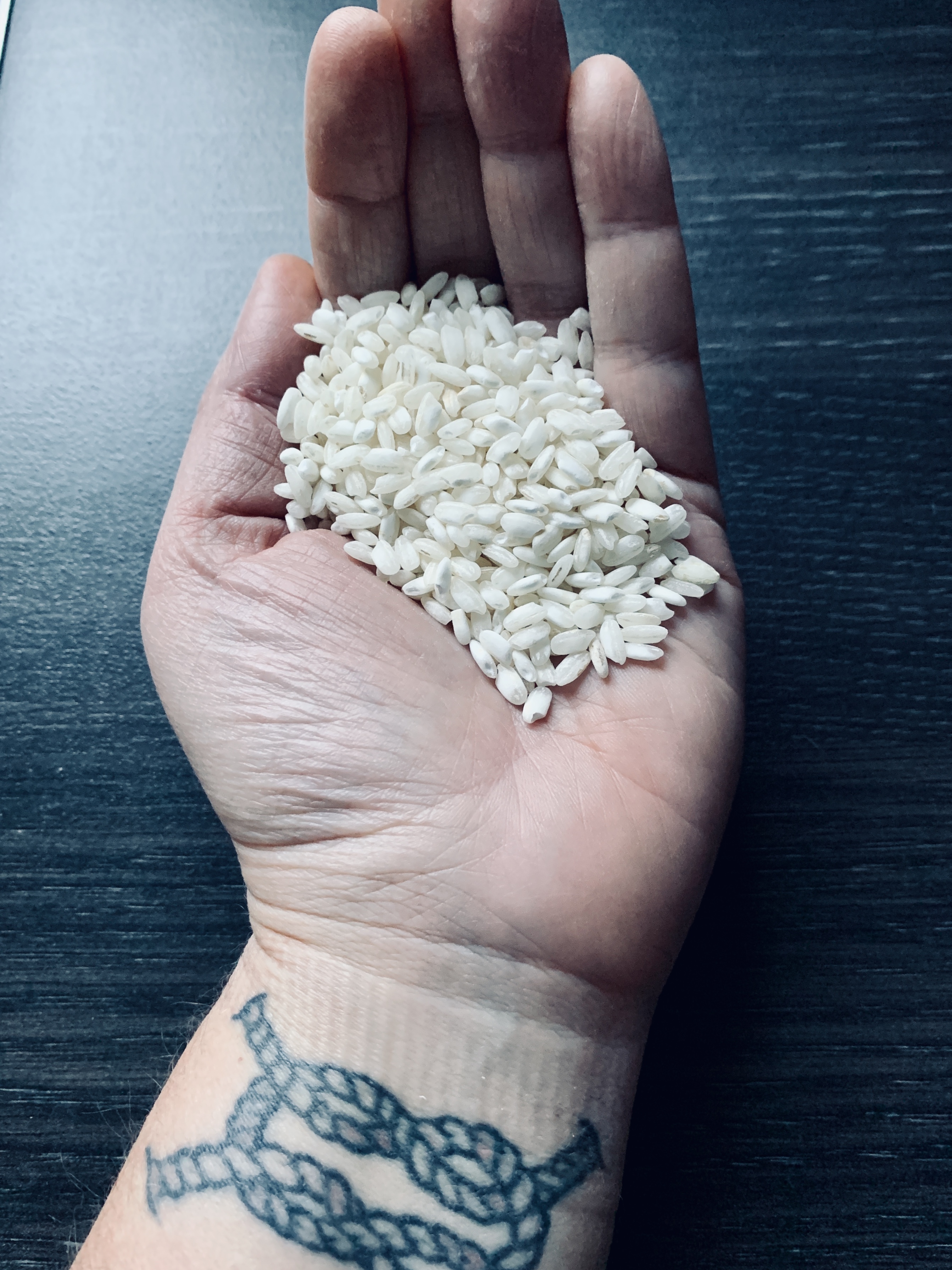
We use three main types of risotto: Carnaroli, Arborio and Vialone Nano, the latter practically impossible to find in the UK, unfortunately, but one of the most used in my region, Emilia-Romagna. The type of rice is fundamental and all the above are rich in starch, which makes for a creamy risotto.

In Italia le qualità di riso più usate sono: Carnaroli, Arborio e Vialone Nano, quest ultimo praticamente introvabile in Regno Unito purtroppo, ma uno dei più usati in Emilia-Romagna, in quanto ampiamente coltivatovi. Il tipo di riso è fondamentale e le qualità di cui sopra sono ricche di amido, ideali per un risotto cremoso.

The other important element to a good risotto is the alcohol. Most risotto recipes call for white wine and you would use red wine on a handful of them (on top of my head I can think of risotto alla pilota, which is made with sausages). To be honest, sometimes I use beer instead of white wine, as I like the slightly bitter accent it gives to some of the ingredients.

L’altro importante elemento per un buon risotto è l’alcool. La maggior parte delle ricette per risotti utilizzano vino bianco e il rosso si usa per pochi risotti (mi viene in mente il risotto alla pilota, con le salsicce o comunque di carne (braciole o puntarelle, a seconda della ricetta). Qualche volta, a seconda degli ingredienti, uso la birra al posto del vino, perché mi piace quella punta di amarognolo.

A good risotto starts with a soffritto made with vegetables. I use onions or shallots most of the times, which go with most risotto recipes (asparagus, courgettes, saffron, aubergines, etc). Sometimes I use garlic instead, especially with mushrooms risotto or seafood.

Un buon risotto inizia dal soffritto di verdure. A me piace usare principalmente cipolle o scalogna, che si adattano alla maggioranza delle ricette (di asparagi, di zucchine, allo zafferano, con le melanzane, ecc). A volte uso l’aglio, particolarmente per il risotto di funghi o di pesce.

Finally, the secret of the best risotto, is patience. You need to wait for each of the ladles of liquid to be absorbed before adding the next, you need to stir it with love, to let the starch out in the sauce, you need to taste it and love it, little by little.

Infine, il segreto per il miglior risotto è la pazienza. Bisogna aspettare che ogni mestolo di liquido sia assorbito, prima di aggiungere il successivo, bisogna mescolare con amore, per estrarre l’amido dal riso, devi assaggiarlo e amarlo, poco a poco.

I will share my risotto recipes in this blog, however I felt that I needed first to explain what a risotto is about, not rushing, choosing the right ingredients, having patience.

Condividerò le mie ricette per risotti in questo blog, tuttavia dovevo prima spiegare cosa fa un risotto, la calma, la scelta degli ingredienti giusti e la pazienza.